
Typical rear anti-squat
Anti-squat is primarily an off-road rear setting; on-road cars rarely have it.
| Class | Typical rear anti-squat |
|---|---|
| 1/10 off-road buggy (2WD/4WD) | ~1° to 3° |
| 1/8 buggy / truggy | ~2° to 4° |

AI Feedback on Your Setup
Talk with an AI Mechanic that actually knows your car's exact setup, anytime, anywhere.
What is anti-squat, and how can you use it to tune your RC car's performance? Learn about squat and dive and their effects here.
Anti-squat is primarily an off-road rear setting; on-road cars rarely have it.
| Class | Typical rear anti-squat |
|---|---|
| 1/10 off-road buggy (2WD/4WD) | ~1° to 3° |
| 1/8 buggy / truggy | ~2° to 4° |

Anti-squat is the angle at which the rear suspension pins are tilted upward at the front when viewed from the side of the car. 0 degree anti-squat indicates the pins are parallel with the chassis. If the front of the pin is angled upward, this is anti-squat, and if it is angled downward, it is called squat or pro-squat.
More anti-squat
Less anti-squat (pro-squat is rarely used)
In the front of the car, the suspension pins can also be angled upwards, in which case it is referred to as kick-up, or in some cases pro-dive.
In some on-road applications, the front of the pins may be angled downward, and this is referred to as anti-dive as it keeps the front end of the car from dropping under deceleration.
Most 1/10 and 1/8 buggies sit around 2–3°; grip and track roughness move it within about 1–4°.
Through the rear inner hinge-pin mount or inserts (or hangers), which tilt the rear suspension pins.
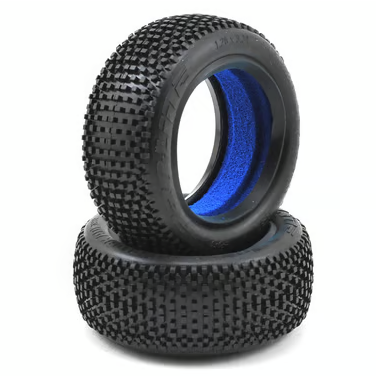
1/8 Buggy Race Tire Chart
Every race tire and compound, organized by brand.
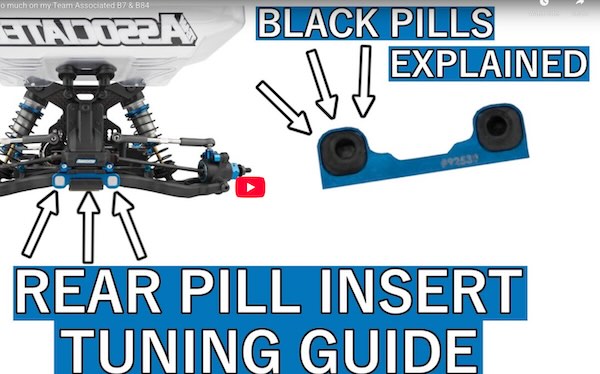
Suspension Tuning with Rear Pill Inserts
Associated team driver Aydin Horne walks us through the basics of using the rear suspension pins and pill inserts to adjust your toe, anti-squat, and roll center to fully lock in your car's handling!
Tuning with Anti-Squat for 1/8 Off-road Racing
The Drake continues his great series of setup tips with this explainer of anti-squat, and how to use it to tune off-road RC vehicles.
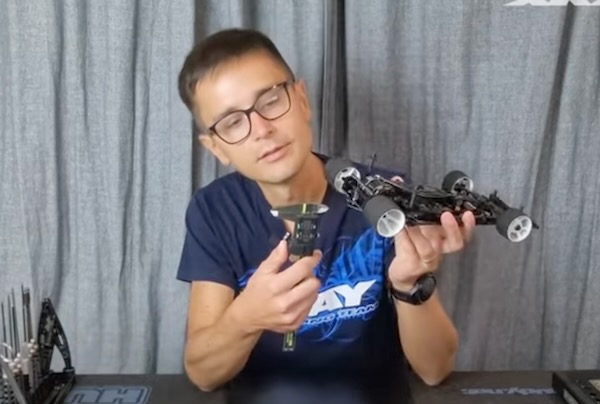
X12 '25 Pod Angle Setting
XRAY's Alex Hagberg explains how to set up your X12 '25's rear pod, and what the anti-squat or pro-squat angles will do to affect your handling.

How to Make Your Off-road RC Car Handle Bumps
Yet another great explainer from the Hall Bros, this time with 10 great tips on how to improve your car's setup so it'll handle bumps better.
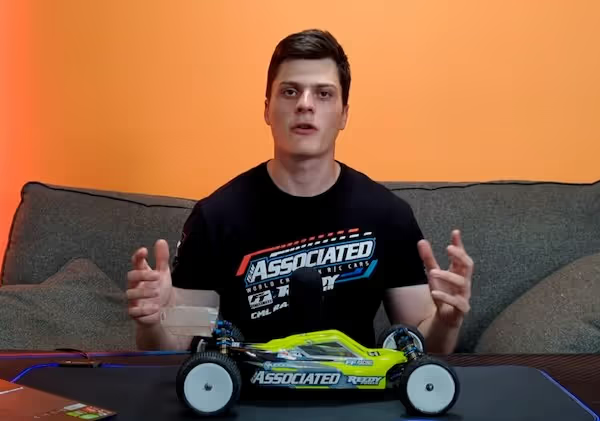
How to Get More Rear Traction
The Hall Bros provide another excellent explainer video, this time with a focus on increasing rear traction, primarily for 1/10th scale off-roaders. They go through several options and explain how each is useful on different parts of the track.
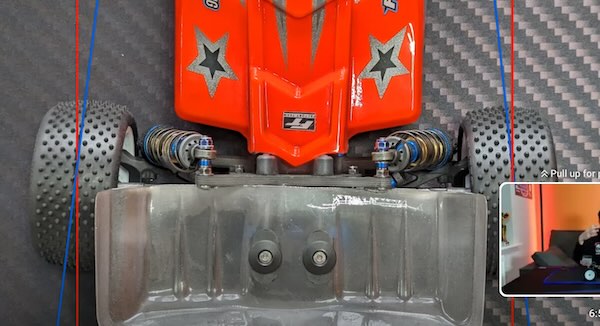
Toe-in and Anti-squat Tuning for 1/10 Scale Off-road RC Cars
The Hall Brothers give a great explainer of the basics of toe and anti-squat - what they are, how to set them, and how they affect your handling, with a focus on 1/10 off-road racing.